Roadies across the country are gearing up for South Africa’s toughest one-day cycle challenge, which is all set to roll through the mountains of the Lowveld on July 19.
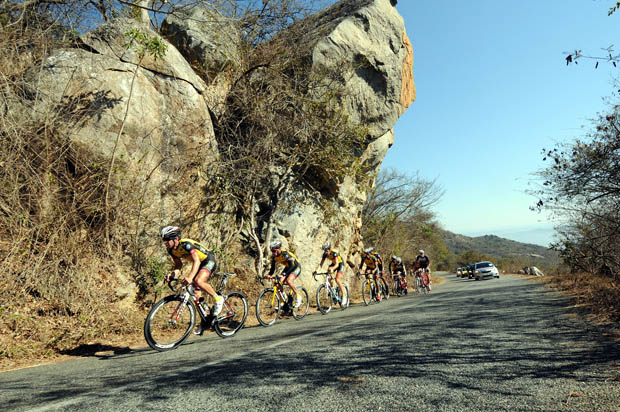 Now in its 31st year, the three-stage Bestmed Jock Cycle Classic will see riders cover a total of 151km on the roads around Nelspruit, White River and Sabie.
According to race director Wynand de Villiers, the Mpumalanga-based stage race remains a perpetual challenge for tar junkies everywhere, with participants returning year after year.
“The Jock represents the toughest day a rider can spend on his road bike. At least three-quarters of the field has ridden the Jock at least once, with some riders having completed as many as 25.”
De Villiers says it is with good reason that the race motto states: “With every Jock medal worn, again a cyclist is born”.
“I suppose this speaks for itself,” he says.
Two-time winner Dylan Girdlestone will head the field as he defends his title for new team Bonitas against assaults from the top domestic pro teams.
Thanks to special dispensation from the Mbombela traffic authorities, at least a thousand additional riders will be accommodated beyond the usual limit of 1 500 participants this year.
De Villiers says more than 150 marshals and metro police officials will provide excellent intersection control and road patrols for safe riding.
“Once out of Nelspruit, the roads are quiet and the road surfaces are very good.
“The race has a very good safety track record and the new route allows us to bring in more riders because it passes along the outskirts of Nelspruit and not through the centre of town as in the past.”
The traditional Jock route, which saw riders gritting their teeth on the infamous Boulders and Hilltop climbs, was abandoned last year due to roadworks.
With construction still ongoing, organisers have been forced to keep to the new course, which bypasses the original out-and-back route from picturesque Barberton via Nelspruit and Kaapmuiden.
The race now starts and finishes at the world-class Mbombela Stadium on the outskirts of Nelspruit.
The 43km breakfast stage heads out towards White River before turning towards Sabie for the 45km lunchtime leg. In the afternoon, riders take on the 63km final stage back to Nelspruit.
But, says De Villiers, as 2013 finishers will attest, participants will not be short-changed in terms of the challenge.
He says riders will once again do battle against another two-headed monster in the form of the 7km Spitskop climb on stage two and the final 10km ascent up Long Tom Pass, which has a gradient of seven per cent.
The 108km two-stage option, for riders disinclined to push their bodies to the limit, will still be a fierce challenge as it includes both climbs, adds De Villiers.
“If you’re feeling that the winter has been a bit too long, the one and two-stage options are a safe bet and all finishers will receive medals.”
As far as cut-off times are concerned, he says organisers will allow riders to continue with the next stage if they finish the previous leg before their scheduled start time.
“The average rider takes around six hours to complete all three stages. We do however enforce a cut-off of 5.30pm for the last stage due to safety reasons.”
De Villiers says returning to the old route may still be a possibility once construction works are complete but the final choice will be a democratic one.
“We will send out a survey to riders following this year’s race and adhere to the majority’s wishes. In other words, we’ll let the riders decide.”
Registration for the event, which is presented by ASG, takes place from 10am to 4pm on the Thursday before race day at Cycle Lab Fourways, and from 2pm to 6pm on the Friday at the stadium.
A portion of all entry fees will be donated to the Cancer Association of South Africa.


