Ciska du Plessis-Austin was elected as the president of Cycling SA at the beginning of February. In the Bunch caught up with the first female president of the organisation.
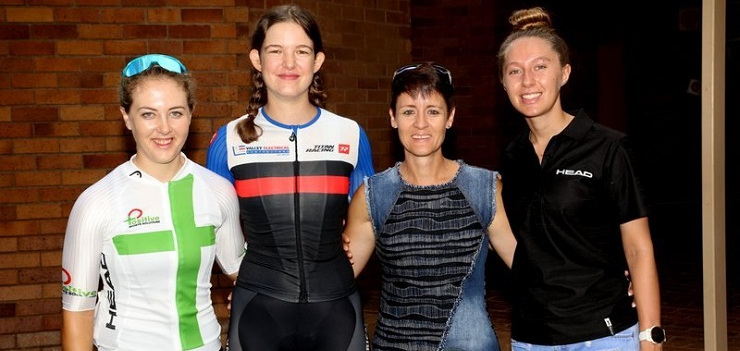
Cycling SA president Ciska du Plessis-Austin (third from left) with Frances Janse van Rensburg (far left), Tiffany Keep and Azulde Britz. Photo: Cycle Nation
In the Bunch: What would you say is the current state of affairs after your first 50 days as the Cycling SA president?
Ciska du Plessis-Austin: I have used this period to assess the status of all the disciplines and commissions, inclusive of understanding their defined roles and responsibilities. There are a number of shortcomings, but this is due to the federation having limited employed resources. We are now working on how the volunteers will fill these areas whilst phasing in dedicated resources.
ITB: What have been the challenges and highlights for you in this role?
CA: The challenge is that many people expect immediate change. It will take time for the federation to be stable and trustworthy again. So much needs to be done and there are not sufficient resources at the moment. I’m taking it one bite at a time and working with what we’ve got for now. (Yes, if you read this and want to become involved, please put up your hand).
ITB: What have you personally learnt/achieved in your life and career through being president during this time?
CA: I think I can only measure achievements as the president a little later on – I have set myself a deadline for 18 months since I took on the role. Ask me again at the end of July, 2021.
ITB: What would you say you’re most passionate about?
CA: In this particular role I cannot be biased towards a specific discipline or group of people. But it is not a secret I’m incredibly passionate about junior development and racing. During this time we can shape the riders and their future. There are still opportunities for change to allow them a potential career as their future. It is an area I’m working on hardest at the moment. How to introduce the sport, identify talent, develop that talent and provide them with a pathway towards the future.
ITB: What changes would you say have been implemented during this time?
CA: We have been working hard on the financial protocols and policies. Prior to being able to engage with corporates and external alliances I want to be sure we have our house in order. We have also called for external proposals and interest to engage from external and corporate parties – deadline April 20. A road cycling event organisers’ forum will take place on April 22 to discuss proposals on the table to change the calendar and introduce a number of leagues/series events. We are planning the same for MTB and will send a call out during the next week. A special general meeting had been scheduled for May 5 to adopt changes to the constitution that will allow the federation to function more like a business and to ensure governance protocols are better in place.
ITB: Personally, do you feel what has been planned to be achieved during this time has been achieved?
CA: Yes, mostly. I will actually only be able to really tell you that in May.
ITB: What changes are you still planning to make or do you still want to see being implemented?
CA: There are many that we will discuss for execution during the SGM in May. I structured a basic plan which I presented to the General Assembly. This now needs to be put into an operational plan for approval at the SGM as it requires changes to our statutes. There are also a number of exciting proposals received so far which will be taken into consideration.
ITB: Where do you hope to see the sport in the short-term and long-term?
CA: Transformed. It’s not just about race, but also about changing the way we do things and setting alternative outcome expectations. In the short term we will work on aligning our governance and policies to better serve the sport and the members of the federation. A longer term goal is to have cycling recognised as a school sport. It is imperative that this happens. The South African Schools Cycling (SASC) is working hard on this and we are working closely to ensure this happens.
ITB: What is your dream for cycling in SA?
CA: A united sport for all. I feel we can do better in achieving our collective goals through an economy of scale. Safety of the cyclists, transformation, performance, etc.
ITB: With fears of the spreading of the coronavirus, how do you feel this is impacting the sport and economy?
CA: The impact on SA cycling is felt. My suggestion is for events not to cancel, but to postpone, since we are fortunate that we have a much longer summer and can utilise the “base miles” months as well if we need to.
I was also thinking this past weekend how the sport could create some opportunities within this major challenge. Cycling’s global financial model is built on sponsorship, with road cycling considered the biggest area of “business”. There had been a number of concerns expressed by the team owners and how they will keep sponsors content. So, perhaps consideration should be given that the Tour de France should happen online (Zwift/Tacx etc) or the suggestions made on social media for the Tour de France, Giro and Vuelta to combine into a three-week race during September to show a united front and, keeping all sponsors involved, offering them the necessary awareness.
I like the second idea and think the teams could even consider bringing in “reserves” to make it interesting and challenge one another. A different format and approach [could be adopted] to incorporate the riders also, who might lose out if only one event takes place. When things like this happen it allows a time to reflect on how things had been done in the past and how we could challenge ourselves to think out of the box and move a little away from an area where we had been complacent.
ITB: How is the organisation dealing with the virus and especially with you being new in the position? Is there pressure on you and how are you handling it?
CA: Of course, I’m very conscious about the virus and the progress in terms of spread. It’s all about reducing the curve. As a nation we might not be impacted as much yet, but learning from other nations who have we have been offered the chance to act instead of waiting to react.
The steps taken to date are the postponement of all events and gatherings of more than 100 people, cancellation of all travel by Cycling SA and provincial representatives and the African Cycling Confederation Special General Meeting scheduled for April 8 has been postponed until a future date.
With the lockdown now coming into place, I urge cyclists to adhere to the guidelines and the regulations put in place by government. No provision had been made for outdoor training during the announcements and alternatives should be considered to stay fit through indoor and backyard activities. This could be on indoor trainers, following a High Intensity Interval Training programme, skipping etc.
The lockdown will have a major effect on our athletes preparing for events later this year, though there is now a little less pressure following the postponement of the Olympic Games.


