Getting through a race like the Cape Epic requires a lot of energy, which means participants need to be fed properly. But what happened to the food that was destined for this year’s riders after the race was cancelled? In our recent “sit down” with Cape Epic founder Kevin Vermaak, we asked him.
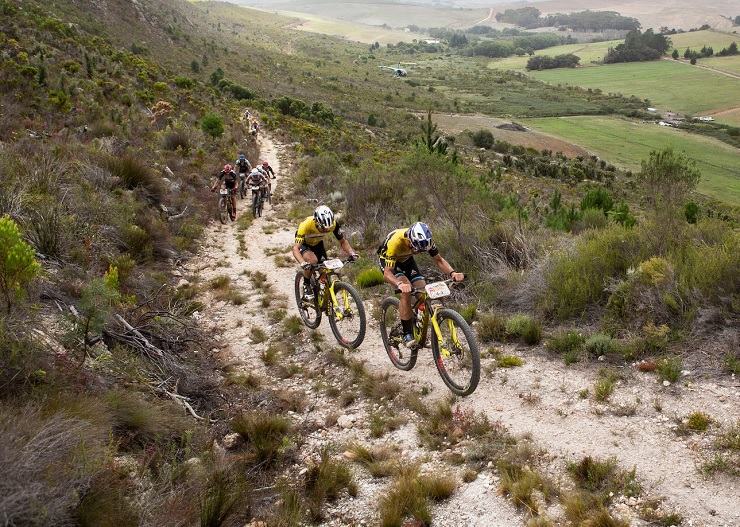
Cape Epic founder Kevin Vermaak says the food that was planned and prepared for this year’s riders was donated to numerous communities. Photo: Nick Muzik/Cape Epic
In the Bunch: How much food was ready and prepared for the 2020 Cape Epic?
Kevin Vermaak: We pride ourselves on the preparation and level of detail that we invest in our event. We plan months, even years, ahead. There was no way to plan for the Covid-19 pandemic and we found ourselves with 5.5 tonnes of food with no riders to feed.
ITB: Were donations made to the communities of the host towns?
KV: Due to the cancellation, we found ourselves sitting with food that could potentially have gone to waste. The communities through which the Epic passes are important to us and there are some incredible charities and community-based initiatives that operate in the Ceres, Tulbagh and Wellington areas, so we decided to ease their burden through food donations.
In Ceres, the Huis Pieter Strauss retirement home used the food to feed their residents and those in need in the nearby Prince Alfred Hamlet. Steinthal Child and Youth Care Centre in Tulbagh is home to 150 children from underprivileged communities and was one of nine organisations in Tulbagh to benefit from the donation. Seven worthy causes, including the Little Fighters Cancer Trust, received donations in the Wellington and Paarl areas.
Being able to assist those in need in these dire circumstances was a small gesture, but one that had far-reaching influences.
ITB: Do you usually donate leftover food to communities?
KV: Yes, after each stage we donate leftover food to charities and communities. However, this was the first time we have donated such a large amount of food.
ITB: Does the event assist the various communities in other ways?
KV: The Epic has a proud history of supporting organisations and charities along the route each year. The event also invests back into the sport by presenting the Exxaro Special Jersey, which is focused on developing cyclists.
Prior to the 2020 Epic’s cancellation, over R24-million had been raised in the name of charities.
Once the route for the year has been established, the event supports the local communities in several ways.
A R10 000 cash donation is made to each town and/or municipality in which the event is staged. The identification of the recipients is done in conjunction with each municipality.
There is also a daily food donation to identified charities at the end of each day’s stage.
Further donations are made to identified and approved institutions, like schools and development programmes. These donations vary in amount and are largely dependent on a specific need in the area.
We encourage the towns and communities to get involved in the flyover competition where the best, pictured from the air, wins R7 500.
We have a best town spirit award where the town that shows the biggest interest and involvement while the race visits it wins R7 500, which is presented to the tourism office.
If there is a need for a certain product and/or service in any of the communities, we connect our sponsors who can assist with the parties involved.
ITB: How did being able to give back in this way make you feel following the trauma from cancelling the event?
KV: Receiving messages of thanks from the various organisations that received the food donations was overwhelming. In general, we tend to take a plate of food for granted, but many people out there may not know when their next plate of food will be or where it will come from.
To hear that our donation brought many to tears and was able to feed the hungry as South Africa’s lockdown began was an incredibly emotional experience and one that will remain with me for a long time.


